
Blog
Do At-Home LED Light Masks Really Stimulate Collagen Production for Anti-Aging?

Do At-Home LED Light Masks Really Stimulate Collagen Production for Anti-Aging?
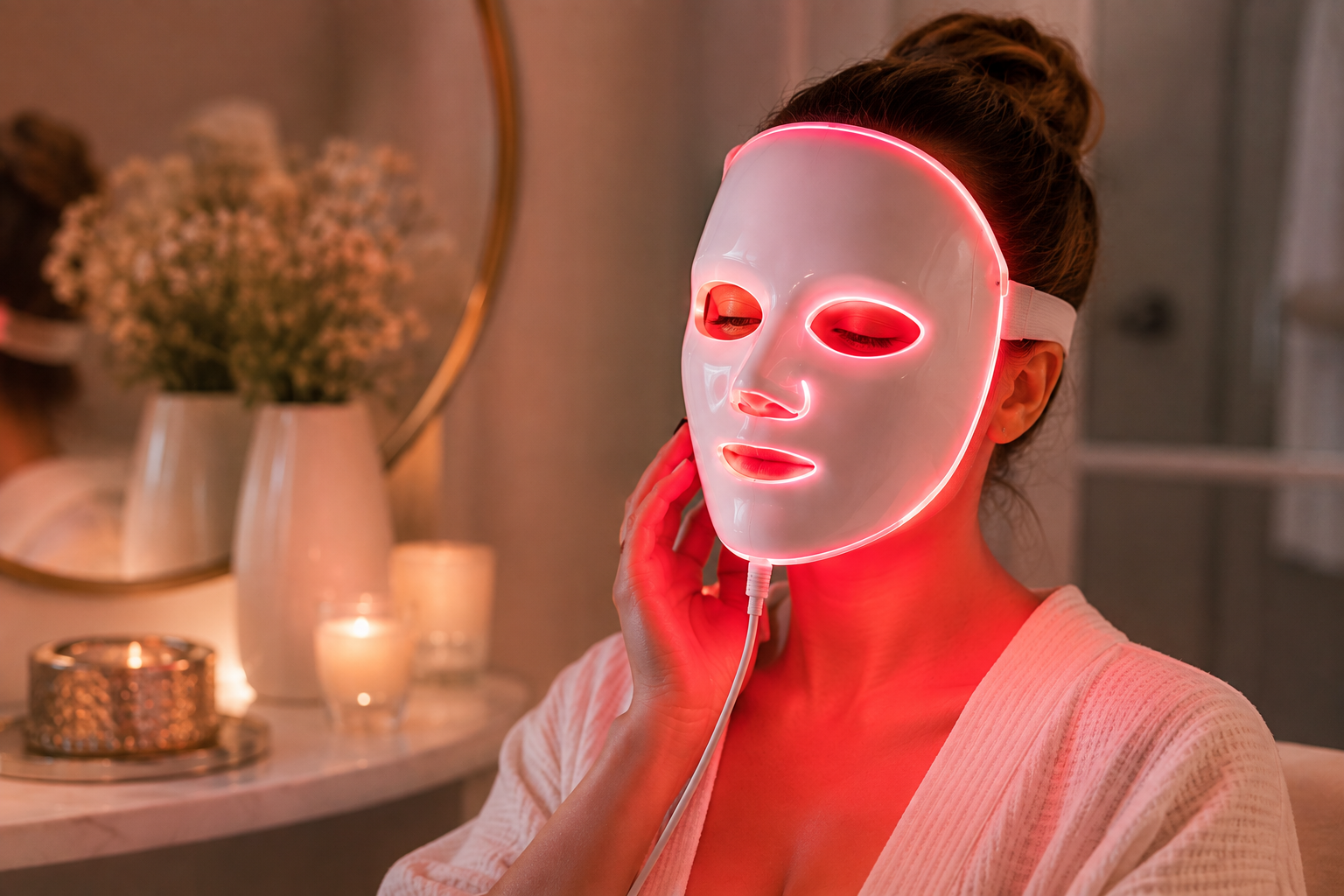
As skincare technology continues to evolve, at-home LED light masks have become a popular option for people looking to improve the appearance of fine lines, wrinkles, and other signs of aging. One of the biggest questions is whether these devices can actually stimulate collagen production or if their benefits are mainly cosmetic.
The short answer is that certain types of LED light therapy, particularly red and near-infrared light, may support processes associated with collagen production. However, results depend on the device, wavelength, treatment schedule, and individual skin.
What Is Collagen and Why Is It Important?
Collagen is a structural protein that helps give skin its strength, firmness, and elasticity. As we age, the body’s natural production of collagen gradually decreases. Sun exposure, environmental stress, and lifestyle factors can also contribute to the visible signs of collagen loss.
Lower collagen levels can contribute to fine lines, wrinkles, reduced firmness, and changes in skin texture. This is why collagen support is an important goal in many anti-aging skincare routines.
How Does LED Light Therapy Work?
LED light therapy uses specific wavelengths of light to interact with the skin. Unlike ultraviolet light, LED devices designed for skincare do not rely on UV radiation.
Red and near-infrared wavelengths are commonly used in anti-aging LED treatments. These wavelengths can penetrate the skin and may influence cellular processes involved in skin repair and regeneration.
Research into photobiomodulation suggests that red and near-infrared light may support fibroblast activity. Fibroblasts are cells involved in producing collagen and other components of the skin’s extracellular matrix.
However, this does not mean that every LED face mask will produce the same results.
Can Red Light Stimulate Collagen Production?
Red light is one of the most commonly used wavelengths for anti-aging LED skincare.
When used consistently, red light therapy may help support the skin’s natural processes and improve the appearance of fine lines and skin texture. Some studies have reported improvements in skin appearance following repeated LED treatments.
The important point is that collagen-related changes are gradual. An LED mask is not expected to produce dramatic results after one session.
Instead, regular use over time may help support smoother, firmer-looking skin.
What About Near-Infrared Light?
Some advanced LED face masks also include near-infrared wavelengths. These wavelengths can penetrate deeper into the skin than visible red light.
Near-infrared light is often included in LED devices designed to support skin recovery and overall skin appearance. Some products combine red and near-infrared light to provide a broader photobiomodulation treatment.
If your goal is anti-aging skincare, check the wavelength specifications and treatment recommendations of the device rather than choosing a mask based only on its appearance or marketing claims.
How Long Does It Take to See Results?
One of the most common mistakes people make with LED masks is expecting immediate results.
LED light therapy is generally a gradual skincare treatment. You may notice temporary changes in how your skin looks or feels after treatment, but longer-term improvements typically require consistent use.
The recommended schedule varies between devices. Some masks are designed to be used several times per week, while others have different treatment protocols.
Always follow the manufacturer’s instructions and avoid using the device for longer or more frequently than recommended.
Are At-Home LED Masks as Effective as Professional Treatments?
At-home LED masks are designed to be convenient and easy to use, but they are generally less powerful than professional LED systems used in clinics.
This does not necessarily make them ineffective. A lower-intensity device can still be useful when used consistently according to its instructions.
Professional treatments may offer different wavelengths, intensities, or treatment protocols, while at-home masks are designed for regular personal use.
For people who prefer a convenient skincare routine at home, an LED mask can be a practical addition to an anti-aging regimen.
How to Use an LED Mask for Anti-Aging
For the best experience, start with clean, dry skin unless the manufacturer recommends otherwise. Position the mask correctly and follow the recommended treatment duration.
After the session, continue with your normal skincare routine. A moisturizer can help maintain skin hydration, while daily broad-spectrum sunscreen is essential for protecting the skin from UV-related premature aging.
Remember that LED therapy works best as part of a complete skincare routine rather than as a replacement for sunscreen, moisturizer, or dermatologist-recommended treatments.
Final Thoughts
So, do at-home LED light masks really stimulate collagen production?
Evidence suggests that red and near-infrared LED light may support biological processes involved in collagen production and skin repair. With consistent use, these treatments may help improve the appearance of fine lines, skin texture, and firmness.
However, results are not instant, and not every LED mask is designed or tested in the same way. Choosing a quality device, following its instructions, and maintaining realistic expectations are important.
For a comprehensive anti-aging routine, combine LED light therapy with daily sun protection, hydration, a healthy lifestyle, and appropriate skincare products. If you have significant skin concerns or are considering LED therapy alongside medical treatments, consult a qualified dermatologist for personalized advice.