
Blog
Red vs Blue Light in LED Face Masks: What Are the Main Benefits for Skin?

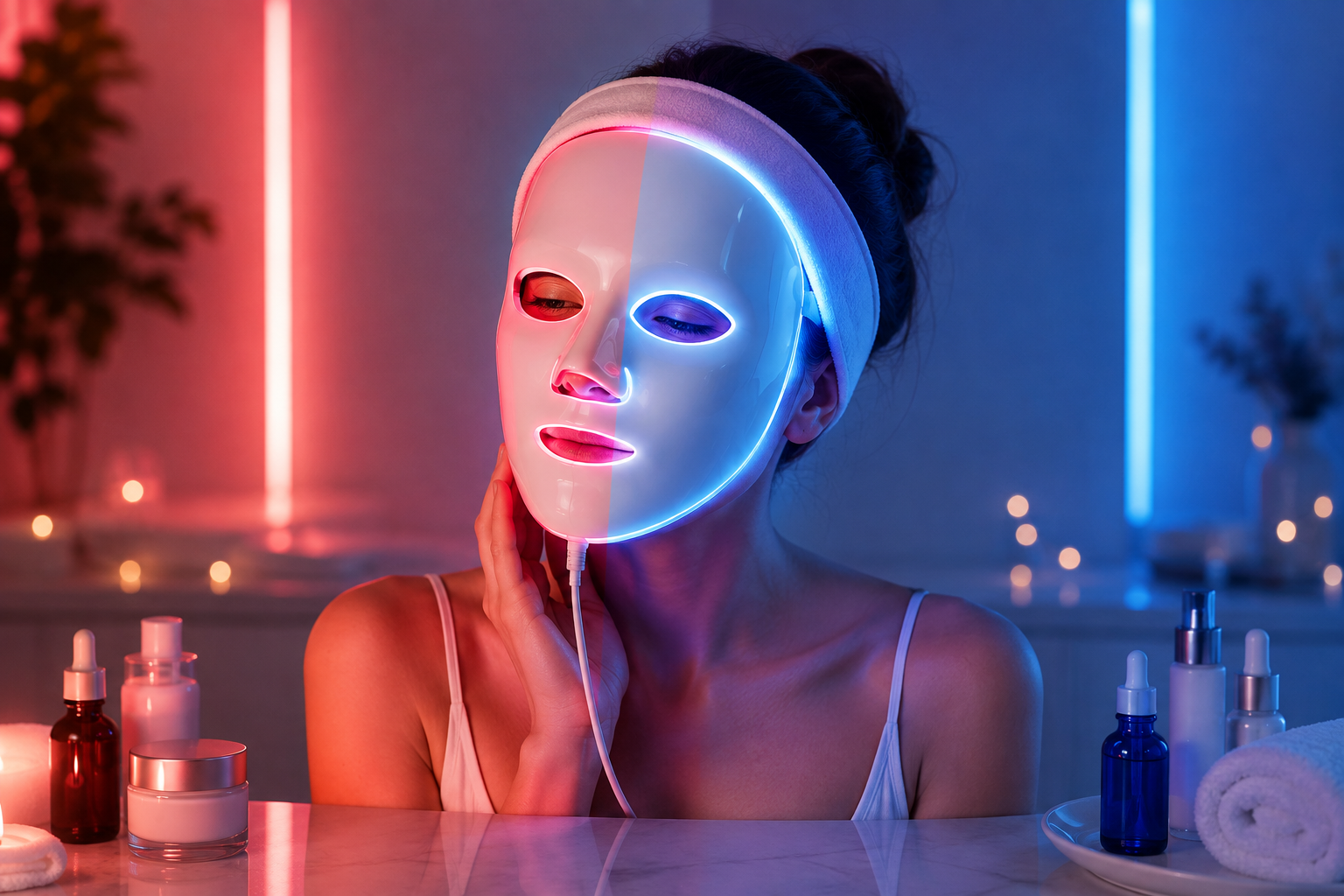
Red vs Blue Light in LED Face Masks: What Are the Main Benefits for Skin?
LED face masks have become a popular addition to at-home skincare routines, but choosing the right light can be confusing. Red and blue LED light are two of the most common options, and each is used for different skin concerns.
Understanding the benefits of red vs blue light can help you choose an LED face mask setting that better matches your skincare goals. While LED therapy can be a useful addition to a skincare routine, it should not be considered a replacement for professional acne or skin treatments.
What Is LED Light Therapy?
LED light therapy is a non-invasive skincare treatment that uses specific wavelengths of light to target different skin concerns. Unlike ultraviolet (UV) light, LED skincare devices are designed to use wavelengths that do not intentionally damage the skin in the same way UV exposure can.
At-home LED face masks typically offer different light settings, with red and blue being among the most common. Some devices also combine multiple wavelengths in a single treatment.
What Are the Benefits of Red LED Light?
Red LED light is commonly used for overall skin care and for supporting a healthier-looking complexion.
1. Supports Skin Recovery
Red light is often used in skincare routines designed to support the skin’s natural recovery process. This makes it a popular choice after periods when the skin looks stressed or irritated.
2. Helps Improve the Appearance of Fine Lines
Red light therapy is widely used as part of anti-aging skincare routines. With consistent use, it may help support the appearance of smoother, firmer-looking skin.
However, results vary between individuals, and an LED mask should not be viewed as an instant solution for wrinkles.
3. Supports a More Even-Looking Complexion
Regular LED treatments may help improve the overall appearance of the skin, making red light a useful option for people who want to maintain a healthy-looking glow.
What Are the Benefits of Blue LED Light?
Blue LED light is particularly popular among people with acne-prone skin.
1. Designed for Blemish-Prone Skin
Blue light is commonly used in skincare devices targeting acne and breakouts. It is associated with effects on Cutibacterium acnes, a bacterium involved in acne development.
For this reason, blue LED light may be included in an acne-focused skincare routine.
2. May Help Reduce the Appearance of Breakouts
When used consistently according to the device manufacturer’s instructions, blue LED light may help support clearer-looking skin and reduce the appearance of occasional blemishes.
It is important to remember that LED therapy does not work equally for everyone, and persistent or severe acne may require professional treatment.
3. Useful for an Acne-Focused Routine
If your main concern is occasional breakouts, an LED mask with a blue-light setting may be more relevant than a red-light-only device.
Red vs Blue LED Light: Which One Should You Choose?
The best option depends on your primary skincare concern.
| Skin Concern | Commonly Used LED Light |
|---|---|
| Acne and breakouts | Blue light |
| Fine lines and aging concerns | Red light |
| Overall skin appearance | Red light |
| Acne-focused skincare routine | Blue light |
| General skin-supporting routine | Red light |
Some LED face masks combine red and blue light, allowing users to address multiple skincare concerns within one routine.
Can You Use Red and Blue Light Together?
Some devices are specifically designed to combine different wavelengths. If your LED mask provides both red and blue settings, follow the manufacturer’s recommended treatment schedule.
Using the mask more frequently or for longer periods does not necessarily mean better results. Consistency and correct use are more important than excessive treatment.
Always read the instructions for your specific device before combining light settings.
How to Use an LED Face Mask Safely
Before using an LED face mask, start with clean, dry skin unless the manufacturer provides different instructions. Position the device correctly and follow the recommended treatment time.
Avoid using the mask more often than instructed. If you experience unusual discomfort, burning, or significant irritation, stop treatment and seek professional advice if needed.
If you use prescription skincare products or have a skin condition, ask a dermatologist whether LED therapy is appropriate for you.
Final Thoughts
The main difference between red and blue LED light comes down to their typical skincare applications. Red LED light is commonly used for overall skin support, recovery, and anti-aging routines, while blue LED light is more commonly associated with acne-prone skin and breakouts.
Choosing the right LED face mask depends on your individual skin concerns and the features of the device. With consistent use and realistic expectations, LED light therapy can be a convenient addition to a well-rounded skincare routine.