
Blog
How to Get Rid of Facial Acne Fast Without Harsh Chemical Medications?

How to Get Rid of Facial Acne Fast Without Harsh Chemical Medications?
Facial acne is one of the most common skin concerns, and it can be frustrating when a new breakout appears before an important event. While there is no guaranteed way to make acne disappear overnight, a gentle and consistent skincare routine can help calm breakouts and reduce the chance of new ones.
You do not always need harsh products to care for acne-prone skin. Simple habits, suitable skincare ingredients, and treatments such as LED light therapy may help support clearer-looking skin.
Why Does Facial Acne Happen?
Acne develops when hair follicles become clogged with oil, dead skin cells, and other debris. Bacteria, inflammation, hormones, and excess oil production can also contribute to breakouts.
Common acne triggers can include hormonal changes, stress, certain skincare or cosmetic products, and friction or pressure against the skin.
Understanding what may be triggering your breakouts can help you create a more effective skincare routine.
1. Cleanse Your Skin Gently
One of the simplest steps for acne-prone skin is using a gentle cleanser.
Wash your face regularly, especially after sweating, but avoid aggressive scrubbing. Scrubbing too hard can irritate the skin and potentially make inflammation worse.
Choose a cleanser that removes excess oil and impurities without leaving your skin feeling extremely dry or tight.
2. Try Salicylic Acid
Salicylic acid is a commonly used ingredient for acne-prone skin. It belongs to a group of ingredients called beta hydroxy acids (BHAs) and can help exfoliate inside pores.
It may be useful for people dealing with clogged pores, blackheads, and occasional breakouts.
If you are new to salicylic acid, start with a product designed for your skin type and follow its directions. Using too much can cause dryness or irritation.
3. Consider Benzoyl Peroxide
Benzoyl peroxide is another well-known acne treatment. It can help reduce acne-causing bacteria and is commonly used for inflammatory breakouts.
Although it can be effective, some people experience dryness, peeling, or irritation. If your goal is to avoid harsh-feeling treatments, introduce it carefully and use an appropriate concentration according to product instructions.
If your skin becomes significantly irritated, stop using the product and consider professional advice.
4. Can LED Light Therapy Help Acne?
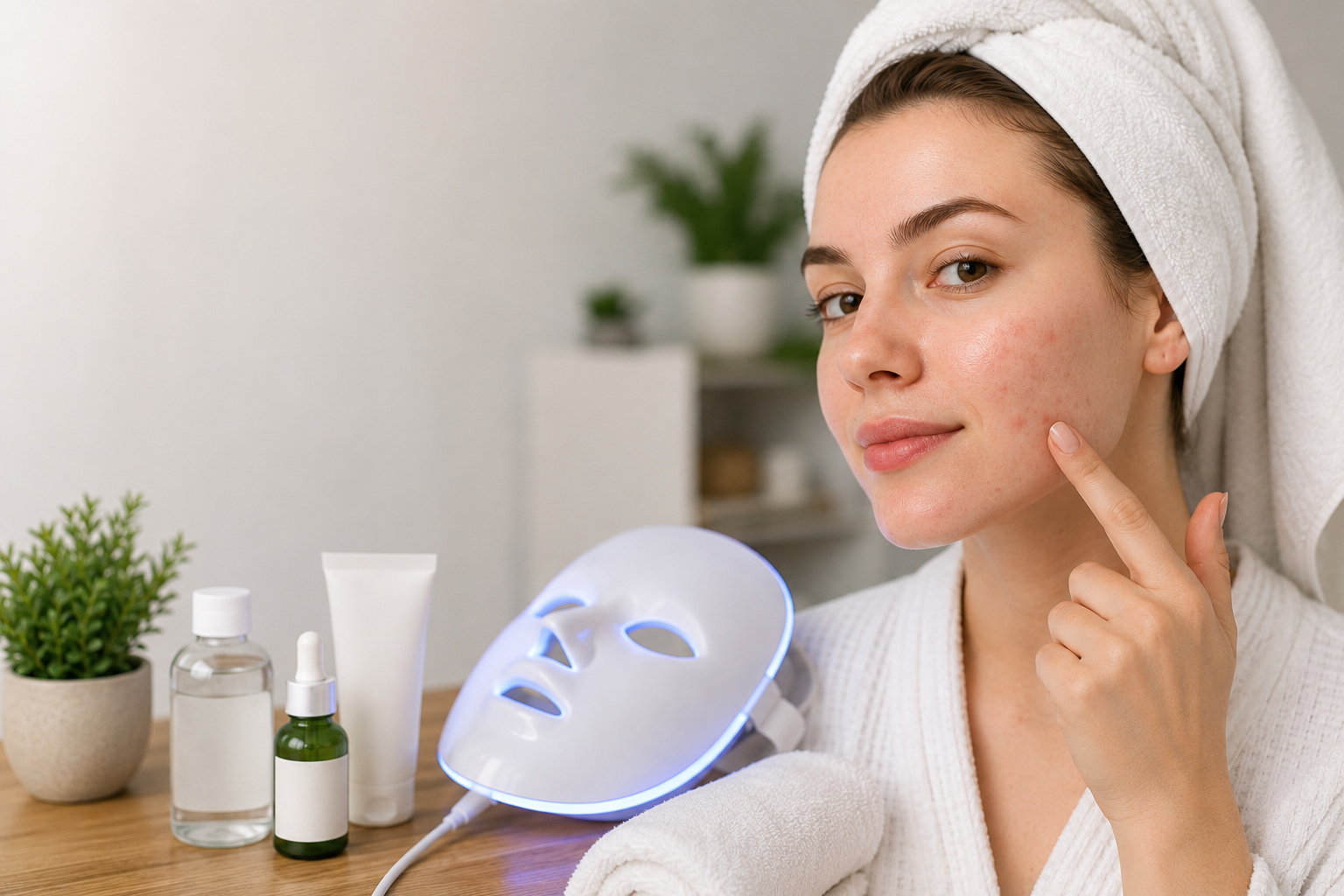
At-home LED face masks are increasingly popular for people with acne-prone skin. Blue LED light is commonly used in devices designed specifically for acne and blemish-focused skincare routines.
LED therapy is non-invasive and can be convenient to use at home. However, results vary from person to person, and an LED mask should not be considered an instant cure for acne.
If you use an LED mask, follow the manufacturer’s instructions carefully. Do not assume that longer or more frequent sessions will produce faster results.
5. Do Not Pick or Squeeze Pimples
It can be tempting to squeeze a visible pimple, especially when you want it to disappear quickly. However, picking or squeezing acne can increase irritation and may contribute to temporary marks or scarring.
Instead, keep your hands away from active breakouts and allow your skincare routine to work gradually.
If you need to cover a blemish, choose non-comedogenic makeup and remove it gently at the end of the day.
6. Keep Your Skincare Routine Simple
Using too many acne treatments at the same time can irritate your skin. A complicated routine is not necessarily a better routine.
A simple approach can include:
- Gentle cleanser
- Suitable acne treatment
- Lightweight moisturizer
- Broad-spectrum sunscreen during the day
Choose products labeled non-comedogenic when possible, particularly if you are prone to clogged pores.
7. Protect Your Skin From the Sun
Daily sunscreen is important even when you are dealing with acne. Sun exposure can contribute to post-inflammatory dark marks that remain after a breakout has healed.
Use a broad-spectrum sunscreen suitable for your skin type. If you are outdoors for extended periods, reapply according to the product’s instructions.
How Fast Can Acne Improve?
The timeline depends on the type and severity of acne and the treatment being used. Some individual blemishes may improve within several days, while a consistent acne routine often takes several weeks before noticeable improvement becomes clear.
Trying to force acne to disappear quickly with multiple strong products can backfire by causing irritation.
Consistency, patience, and gentle skincare are usually more helpful than constantly changing treatments.
When Should You See a Dermatologist?
If acne is severe, painful, persistent, or leaving scars, professional treatment may be necessary. A dermatologist can determine the type of acne you have and recommend treatments appropriate for your skin.
You should also seek professional advice if your acne suddenly becomes much worse or does not improve despite consistent skincare.
Final Thoughts
The best way to get rid of facial acne quickly is not necessarily to use the strongest products available. A gentle cleanser, appropriate acne ingredients, sunscreen, and a consistent routine can help support clearer-looking skin.
LED light therapy may also be a useful addition to an acne-focused skincare routine, particularly when using a device designed for blemish-prone skin.
Most importantly, avoid picking your skin, introduce new products gradually, and give your routine enough time to work. If breakouts are persistent or severe, professional dermatological advice can help you find a more effective long-term solution.